
In this article
Researchers publicly described the DarkSword iOS exploit chain in March 2026 after finding its use in activity dating back to late 2025. Reports linked different variants to multiple operators. DarkSword matters because a visit to a compromised webpage could trigger exploitation on vulnerable iPhones without a conventional app installation or a user clicking a download prompt. Apple has since issued updates addressing the affected vulnerabilities, including broader legacy-device coverage. The current task is to confirm that every managed device runs the latest compatible security release.
Anatomy of a Full-Chain Compromise
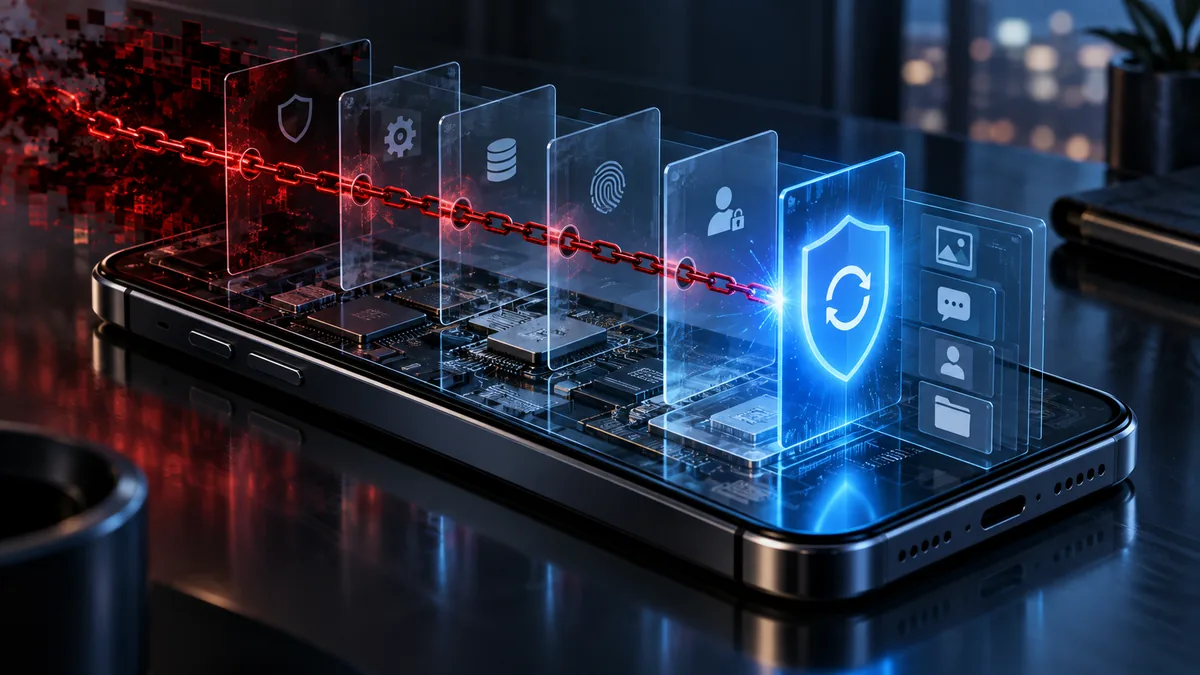
Researchers described a chain of six vulnerabilities that could move from browser execution through sandbox escape and kernel-level compromise on affected iOS versions. Google Threat Intelligence Group reported DarkSword activity on a limited range of iOS 18 versions and tracked use by more than one operator. A chain can combine previously disclosed and zero-day vulnerabilities; calling all six zero-days would be inaccurate. Exact applicability depends on device model and software version, so use Apple’s security content and update guidance for remediation.
In one reported stage, the chain used a GPU-related weakness to escape the browser’s constrained environment and then exploited kernel-level issues. The full chain could grant deep access on an affected device. Treat technical details as version-specific and rely on Apple’s advisories for the patches applicable to each model.
Apple described CVE-2026-20700 as an issue in dyld and rated the observed exploitation as sophisticated. A flaw’s age does not make it harmless; security depends on updates that close it and on deploying those updates across the supported fleet.
Not One Group — Three
Google, Lookout, and other researchers described variants associated with espionage and commercial spyware activity. Those reports show that sophisticated mobile exploit chains can serve different operators and objectives. Attribution, victim counts, and individual campaign details vary by source. For defenders, the reliable operational conclusion is that mobile devices can hold valuable business access and must be included in threat modeling and incident response.
The reports describe different payloads and target sets, so they should not be collapsed into one confirmed campaign. Their overlap in exploit capability shows why mobile threat intelligence must track both the technical chain and the delivery infrastructure.
The Detection Problem
Researchers described rapid collection and cleanup that can leave a short window for device-level detection. Loading a compromised webpage could be sufficient on a vulnerable device, without a separate click or app installation. CISA’s March 2026 deadline concerned remediation of CVE-2026-20700 for federal agencies; it preceded public disclosure of the broader DarkSword chain and did not mean agencies had patched every component of it.
What This Means for Organizations
Mobile devices often authenticate to email, collaboration, password managers, VPNs, and identity services. A compromised phone can therefore expose sessions and approvals beyond the handset itself. The response should map what each device can reach, revoke sessions when needed, and ensure that identity recovery does not let an attacker retain access after a device is contained.
What Security Assessment Would Catch
- Mobile-device management and updates. Measure update adoption by model and operating-system version, flag overdue devices, and confirm unsupported devices are removed from sensitive access.
- High-risk-user protections. Apply proportionate device hardening and account controls for executives and staff who handle sensitive legal, financial, or operational information. Lockdown Mode is an optional protective measure for users who face targeted spyware risk, not a substitute for updates.
- Forensic readiness. Establish how to preserve device and identity evidence, obtain specialist mobile analysis, and correlate device events with identity-provider and cloud logs.
- Access and blast radius. Map email, MFA, messaging, password-manager, VPN, and cloud permissions available from a device. Use conditional access and short-lived sessions where practical.
- Patch cadence. Measure update adoption across mobile fleets and set a response path for urgent security releases rather than waiting for routine device synchronization.
What This Means for Your Organization
- Include phones and tablets in asset inventory, penetration-test scoping, access reviews, and incident-response playbooks whenever they access corporate resources.
- Use mobile threat defense, MDM, and identity telemetry together. No single signal proves a device is clean, so establish escalation for unusual authentication and device behavior.
- Reduce the data and privileges available from mobile sessions; require reauthentication for sensitive actions where the platform supports it.
- Prepare targeted users for focused support and response without implying that every employee is under the same level of threat.
- Keep browser and operating-system updates current, and replace devices that no longer receive security fixes. Treat a suspected compromise as an identity incident too: revoke sessions and rotate access credentials when evidence supports it.
DarkSword is a continuing reason to treat mobile software maintenance and mobile identity as part of enterprise security. Apple’s subsequent patches reduce exposure on updated devices; the remaining work is fleet coverage, protection for unsupported hardware, and a clear response when a device may have been compromised.
Sources and further reading
Google Threat Intelligence: The proliferation of DarkSword